Looking for a home with real architectural charm in Caldwell? You are not alone. Many buyers love the warmth, craftsmanship, and curb appeal of older homes, but it can be hard to tell where Caldwell’s true character-home pockets are and what ownership actually involves. This guide will help you understand where to start your search, what details to look for, and how to evaluate a bungalow or historic home with confidence. Let’s dive in.
Where Caldwell character homes are
If you are searching for authentic bungalow and character-home streets in Caldwell, focus on the city’s historic pockets rather than the city as a whole. According to the City of Caldwell historical tour, the main areas to know are the Steunenberg Residential Historic District, Historic Downtown Caldwell, and North Historic Caldwell.
The best-known cluster is the Steunenberg Residential Historic District, located east of downtown near The College of Idaho. The city describes it as one of Idaho’s most historically intact neighborhoods, with more than 330 residential properties and protections intended to preserve the area’s architecture, scenic character, and historic setting.
Historic records also show that Caldwell’s broader historic-residential landscape includes the Dorman Addition, Washington Heights, and Steunenberg’s Acreage additions. In historic documentation, this area was often referred to as The Heights or The Hill, which helps explain why so many of Caldwell’s best-known older homes are concentrated in this part of the city rather than spread evenly block by block.
If your taste leans more toward early ornate homes, North Caldwell Historic District is another area worth knowing. The district documentation describes it as a smaller pocket of late-19th-century Queen Anne architecture preserved nearly intact in the original townsite.
What counts as a character home
In Caldwell, “character home” can mean more than just one style. The city’s residential historic documentation shows a wide mix of architecture from the 1890s through the 1950s, including Queen Anne, Craftsman/Bungalow, Colonial Revival, Prairie School, Spanish Eclectic, Tudor Revival, Moderne, International, Ranch, and Minimal Traditional.
That variety matters when you are searching online or walking a neighborhood in person. Some homes will feel decorative and detailed, while others may look simpler and more understated. In many cases, the charm comes less from size and more from original proportions, materials, porches, windows, and rooflines that still reflect the home’s era.
How to spot a Caldwell bungalow
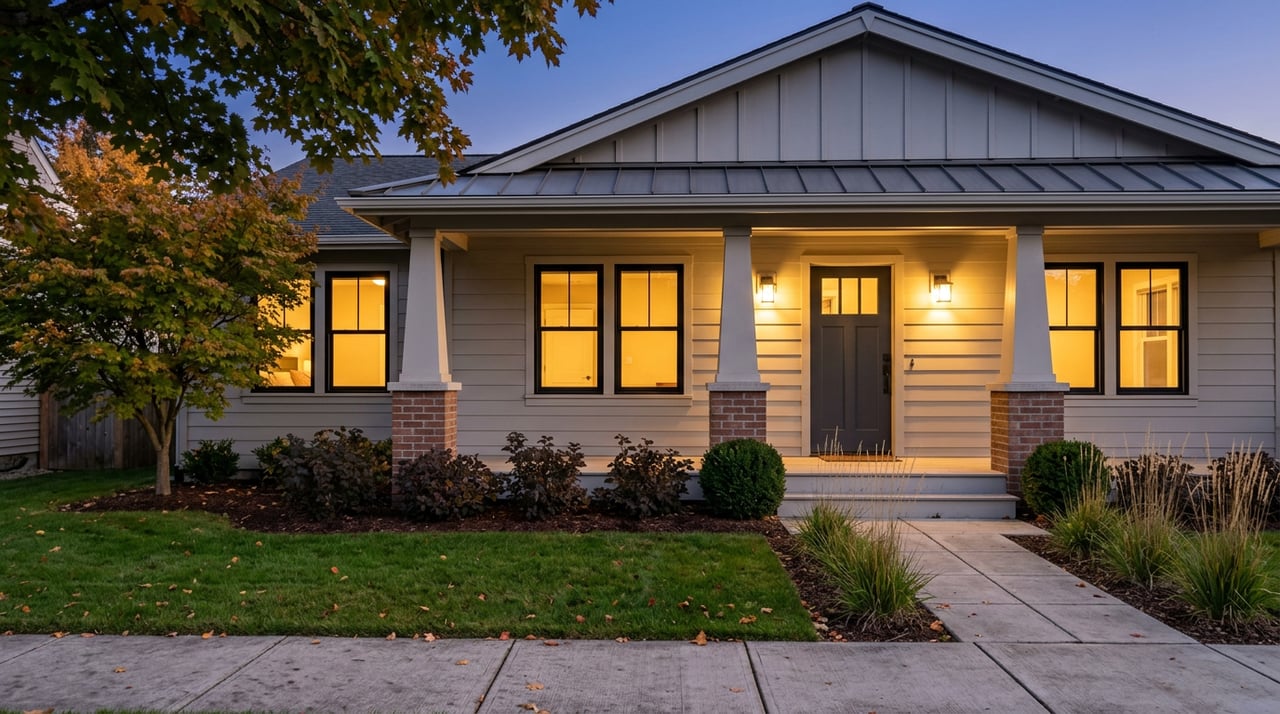
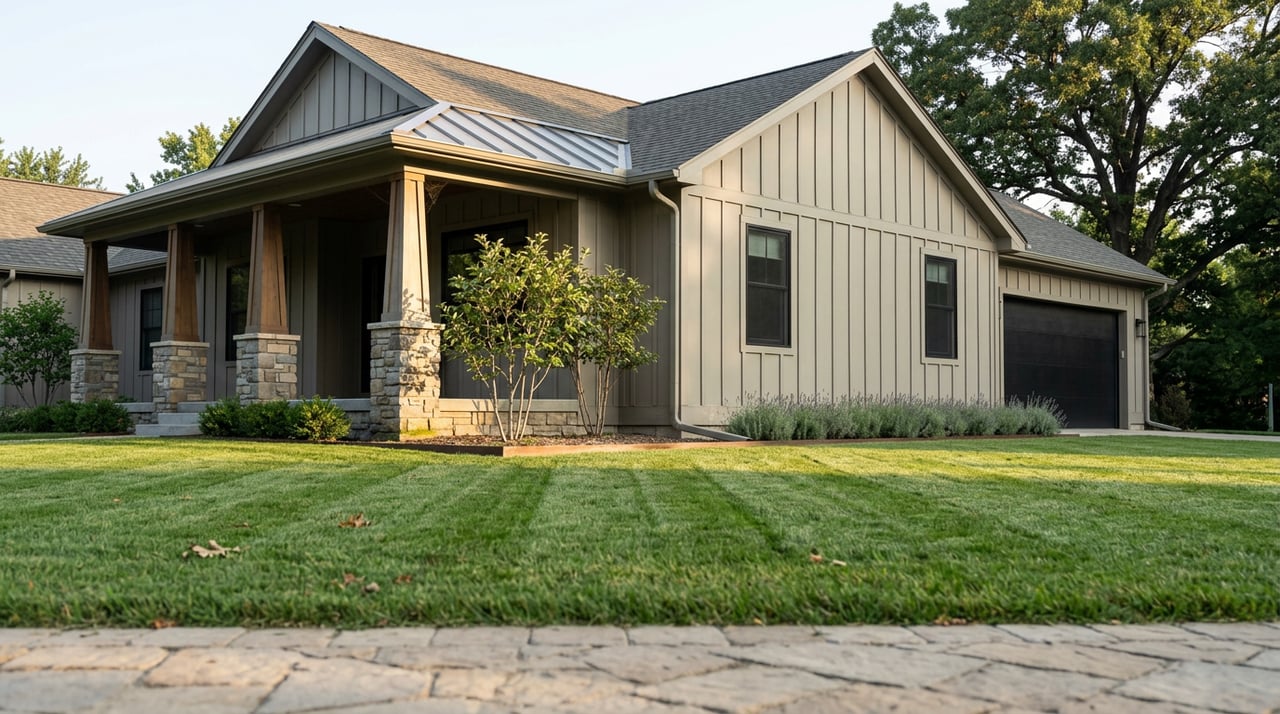
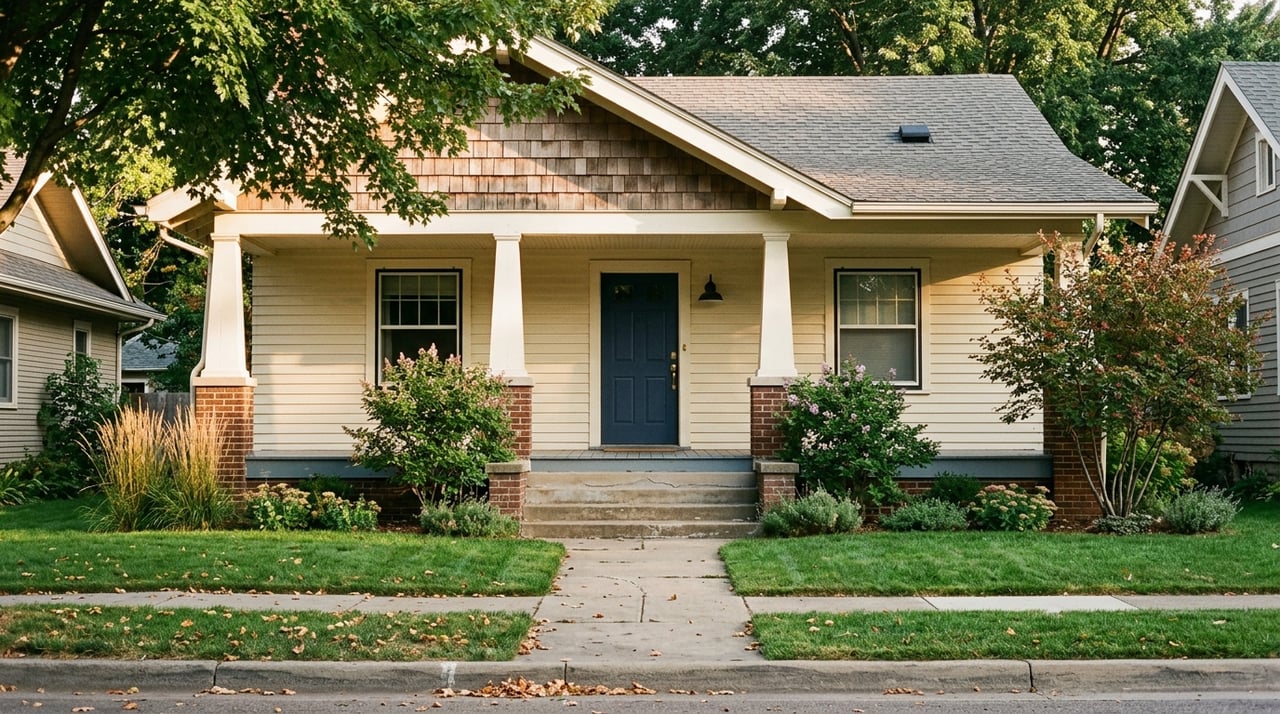
Craftsman bungalows are one of the most recognizable character-home types in Caldwell. Historic district records note that these homes typically feature low-pitched gabled or hipped roofs, exposed rafter ends, knee braces, and front porches supported by substantial tapered columns.
You may also notice a range of exterior materials that add to the visual interest. Caldwell’s historic documentation references lava rock, brick, concrete, poured-concrete Miracle Brick, cobblestones, wood, and stucco, which means bungalow character here can show up in several different forms.
When you tour homes, start with the exterior envelope first. Pay attention to roof shape, porch form, window rhythm, and siding or masonry integrity. Those details often tell you more about a home’s authenticity and long-term condition than fresh paint or staging ever will.
Other styles you may find
Not every Caldwell character home is a bungalow. Some of the earliest homes in the city’s historic areas are Queen Anne properties, which commonly feature steep and irregular rooflines, patterned shingles, wraparound porches, and cutaway bays.
In Caldwell, some Queen Anne homes also blend in classical details tied to Colonial Revival design. That combination can make these homes feel charming and layered without looking overly formal.
Later historic homes may show Colonial Revival, Tudor Revival, Prairie School, or Ranch influences. If you prefer cleaner lines and more restrained design, these homes may appeal to you just as much as a more decorative early house.
Why location matters in Caldwell
One of the biggest mistakes buyers make with older homes is assuming character is evenly distributed across a city. In Caldwell, that is not really the case. The strongest concentration of historic homes is tied to the city’s official historic-tour geography, especially east of downtown near The College of Idaho and along Cleveland Boulevard, Dearborn, Everett, Fillmore, and nearby historic-addition blocks, as outlined by the City of Caldwell’s historical tour.
That does not mean you cannot find an older home elsewhere. It does mean that if your goal is a streetscape with consistent historic feel, mature surroundings, and multiple period homes in close proximity, these areas are the logical place to begin.
What ownership can involve
Owning a character home can be deeply rewarding, but it helps to go in with clear expectations. In Caldwell’s historic district, exterior changes that are visible from the street or public right-of-way generally require a Certificate of Appropriateness review.
That sounds more intimidating than it often is. The city’s historic district design guidelines make an important distinction: ordinary maintenance or repair that does not change design, material, color, or appearance usually does not require approval.
For many buyers, that is useful middle ground. You can maintain and care for the property without assuming every small project will become a major process, while still understanding that visible exterior changes may come with additional review.
What to watch during inspections
With older homes, the biggest surprises are often maintenance-related rather than style-related. Because Caldwell’s historic housing stock includes varied materials and construction methods, inspections should take a close look at foundations, chimneys, porches, siding, and exterior areas where moisture can collect.
The National Park Service guidance for historic houses emphasizes regular maintenance and repair over replacement. It highlights the importance of roofs and gutters, windows and doors, masonry repointing, and moisture control.
That same guidance also warns against water-trapping coatings on masonry and allowing vines or dense foliage to sit directly against the house. These may seem like small issues, but over time they can contribute to more serious deterioration.
Renovation and lead-safe planning
If you are considering updates, age matters. Many older Caldwell homes were built before 1978, and the EPA notes that renovation, repair, or painting work in pre-1978 homes can create dangerous lead dust.
That means projects that disturb painted surfaces may require certified firms using lead-safe work practices. If you are budgeting for improvements, this is an important line item to keep in mind early rather than treating it as a surprise later.
For buyers who love historic charm, this is simply part of smart planning. A thoughtful approach to updates can help you preserve the home’s character while protecting your budget and timeline.
A smart checklist for buyers
When you tour Caldwell bungalows and character homes, keep your focus on the elements that matter most:
- Roof shape and condition
- Original porch form and support details
- Window placement and rhythm
- Siding, masonry, or specialty material integrity
- Signs of moisture intrusion or deferred exterior maintenance
- Chimney and foundation condition
- Whether the home sits within a historic review area
- How much original proportion and visual character remain intact
In a market where many homes have been updated over time, the strongest character properties are often the ones that balance preservation with practical maintenance. That stewardship is a big part of what gives Caldwell’s older homes their lasting appeal.
Why these homes attract buyers
Character homes offer something many newer houses cannot easily replicate. You get craftsmanship, mature streetscapes, and architectural details that create a distinct sense of place.
In Caldwell, that appeal is especially strong in the city’s historic pockets, where the streetscape itself adds value to the experience of living there. Even modest homes can stand out when porch details, original materials, and neighborhood context all work together.
If you are drawn to homes that feel memorable rather than generic, Caldwell’s bungalow and character-home inventory can be worth a closer look. The key is knowing where to search and how to evaluate what you find.
Whether you are buying your first older home, relocating within the Treasure Valley, or looking for a property with lasting architectural appeal, working with an experienced local advisor can help you narrow the right streets, ask better questions, and move forward with clarity. If you are considering Caldwell or other Treasure Valley neighborhoods, connect with Joyce Little for personalized guidance and a high-touch approach tailored to your goals.
FAQs
Where are the best areas for character homes in Caldwell, Idaho?
- The main historic areas identified by the City of Caldwell are the Steunenberg Residential Historic District, Historic Downtown Caldwell, and North Historic Caldwell, with especially strong character-home concentration east of downtown near The College of Idaho.
What architectural styles are common in Caldwell, Idaho character homes?
- Common styles documented in Caldwell’s historic residential areas include Craftsman/Bungalow, Queen Anne, Colonial Revival, Prairie School, Tudor Revival, Spanish Eclectic, Ranch, Moderne, International, and Minimal Traditional.
What features define a Caldwell, Idaho bungalow?
- A Caldwell bungalow often includes a low-pitched roof, exposed rafter ends, knee braces, and a front porch supported by substantial tapered columns, along with materials like brick, wood, stucco, or stone.
Do historic district rules apply to Caldwell, Idaho older homes?
- In Caldwell’s historic district, visible exterior changes generally require review and approval, while ordinary maintenance or repair that does not change the home’s design, material, color, or appearance usually does not.
What should buyers inspect first in a Caldwell, Idaho character home?
- Buyers should pay close attention to the roof, gutters, windows, doors, chimneys, foundation, porches, siding, masonry, and any signs of moisture issues or deferred maintenance.
Do older Caldwell, Idaho homes need lead-safe renovation planning?
- Yes, many older homes may predate 1978, so renovation, repair, or painting that disturbs old paint may trigger EPA lead-safe requirements and should be planned carefully.